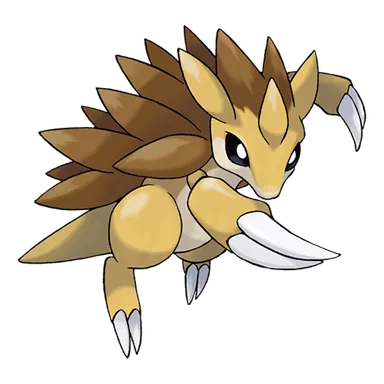
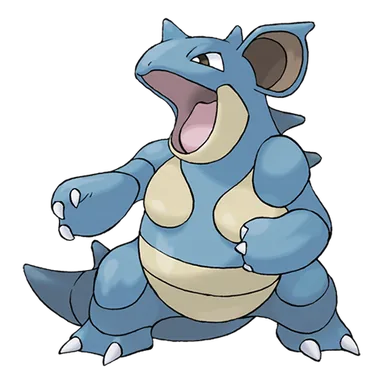
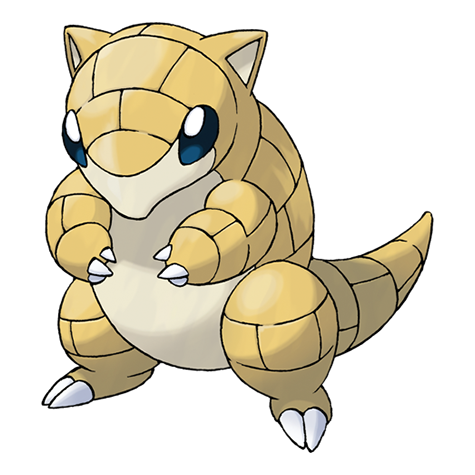
Sandshrew is a Ground-type Pokémon introduced in Generation I and the first stage of its evolution line, with a base stat total of 300.
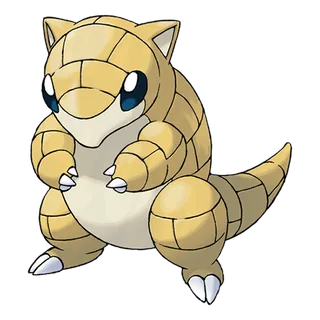
Sandshrew

Abilities
Base Stats
Sandshrew's Weaknesses and Resistances






Evolution Chain
Sandshrew evolves into Sandslash at level 22.
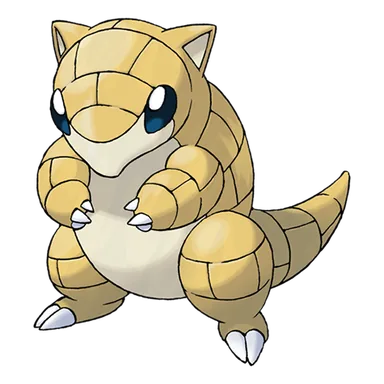 Sandshrew
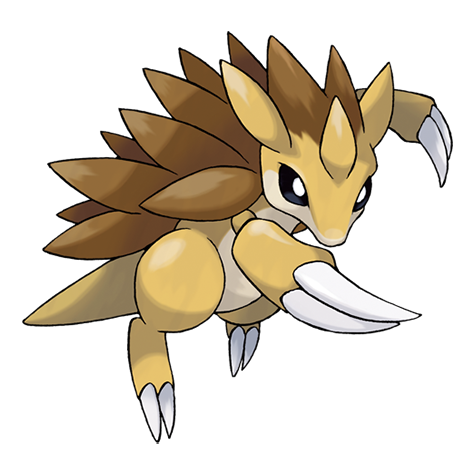 Sandslash
Forms
 Alolan Sandshrew

Sandshrew Playthrough, Competitive, and Nuzlocke Usage
Using Sandshrew in a Playthrough
The Sandshrew line is a physically sturdy Ground-type line built around reliable physical offense and strong Defense. Sandslash can use powerful Ground STAB such as Dig or Earthquake where available, while its Electric immunity creates useful switch opportunities and gives it strong matchups against many Electric-, Poison-, Rock-, and Steel-type opponents. Its main historical weakness is its level-up movepool, which has often required TM investment to give it strong attacks or meaningful coverage. Alolan Sandslash is effectively a different playthrough Pokemon, trading Ground typing for Ice/Steel, numerous resistances, and strong physical STAB at the cost of severe Fire and Fighting weaknesses.
Sandshrew in Competitive Pokémon
Standard Sandslash has historically occupied lower-tier roles as a physically bulky Ground-type, Rapid Spin user, and Swords Dance attacker. Its Defense and Electric immunity can provide opportunities to enter battle, while Earthquake supplies dependable STAB and Swords Dance allows it to threaten substantially more damage after setup. Smogon analyses repeatedly note that Rapid Spin gives Sandslash useful role compression, but competition from stronger Ground-types and hazard removers has generally limited its competitive standing. Alolan Sandslash has a separate niche built around its Ice/Steel typing, Rapid Spin, Swords Dance, and weather-dependent Speed options, but its exploitable weaknesses similarly prevent it from being universally reliable.
Sandshrew in Nuzlockes
Sandslash is a dependable Nuzlocke option when a team needs a physically durable Ground-type, with its Electric immunity and strong Defense making several otherwise dangerous physical matchups considerably safer. FireRed and LeafGreen community analysis specifically identifies useful performances against Lt. Surge, Team Rocket, Giovanni, and other physically oriented opponents, while also noting that its poor natural learnset can require valuable TMs. It is generally less versatile than Nidoking or Nidoqueen and less immediately powerful than some competing Ground-types, but its additional physical bulk can make it safer than frailer alternatives such as Dugtrio. Its usefulness therefore depends heavily on whether the team values durability and Ground typing enough to justify the required move investment.
Learnsets
73 moves · Scarlet Violet
Level Up






Machine



Egg
Pokédex Entries
21 entries
Burrows deep underground in arid locations far from water. It only emerges to hunt for food.
Its body is dry. When it gets cold at night, its hide is said to become coated with a fine dew.
If it fell from a great height, this POKéMON could save itself by rolling into a ball and bouncing.
Disliking water, it lives in deep burrows in arid areas. It can roll itself instantly into a ball.
It prefers dry, sandy places because it uses the sand to protect itself when threatened.
SANDSHREW’s body is configured to absorb water without waste, enabling it to survive in an arid desert. This POKéMON curls up to protect itself from its enemies.
SANDSHREW has a very dry hide that is extremely tough. The POKéMON can roll into a ball that repels any attack. At night, it burrows into the desert sand to sleep.
When it curls up in a ball, it can make any attack bounce off harmlessly. Its hide has turned tough and solid as a result of living in the desert.
It burrows and lives underground. If threatened, it curls itself up into a ball for protection.
Burrows deep underground in arid locations far from water. It only emerges to hunt for prey.
To protect itself from attackers, it curls up into a ball. It lives in arid regions with minimal rainfall.
If it fell from a great height, this Pokémon could save itself by rolling into a ball and bouncing.
It digs deep burrows to live in. When in danger, it rolls up its body to withstand attacks.
Sandshrew’s body is configured to absorb water without waste, enabling it to survive in an arid desert. This Pokémon curls up to protect itself from its enemies.
Sandshrew has a very dry hide that is extremely tough. The Pokémon can roll into a ball that repels any attack. At night, it burrows into the desert sand to sleep.
It can roll its body into a ball. It moves through the desert by rolling at high speeds.
It usually makes its home in deserts and arid zones, where rain does not fall. It digs holes to catch Bug-type Pokémon.
It lives in areas of limited rainfall. When danger approaches, it curls up into a ball to protect its soft stomach.
When its skin gets wrinkled from moisture, it heads for a volcano. It lies flat on a spot with a lot of geothermal heat and dries itself out.
It loves to bathe in the grit of dry, sandy areas. By sand bathing, the Pokémon rids itself of dirt and moisture clinging to its body.
It burrows into the ground to create its nest. If hard stones impede its tunneling, it uses its sharp claws to shatter them and then carries on digging.
Where To Find Sandshrew
19 locations
Mirage Tower · HoennWalking · version details vary
Mirage Tower
Route 111 · HoennHorde, Walking · version details vary
Road 111
Route 113 · HoennWalking · version details vary
Road 113
Goldenrod City · JohtoGift · version details vary
Goldenrod City Game Corner
Johto Safari Zone · JohtoWalking · version details vary
Safari Zone Desert
Union Cave · JohtoWalking · version details vary
Union Cave (1F)
Union Cave (B1F)
Friend Safari · KalosWalking · version details vary
Friend Safari (Ground)
Mt. Moon · KantoWalking · version details vary
Mount Moon (1F)
Mount Moon (2F)
Route 10 · KantoWalking · version details vary
Road 10
Route 11 · KantoWalking · version details vary
Road 11
Route 23 · KantoWalking · version details vary
Road 23
Route 3 · KantoOverworld, Walking · version details vary
Road 3
Route 4 · KantoWalking, Overworld · version details vary
Road 4
Route 8 · KantoWalking · version details vary
Road 8
Route 9 · KantoWalking · version details vary
Road 9
Pokespot · OrrePokespot · version details vary
Rock Pokespot
Wayward Cave · SinnohWalking · version details vary
Wayward Cave (1F)
Wayward Cave (B1F)
Desert Resort · UnovaWalking · version details vary
Desert Resort
Desert Resort (entrance)
Relic Castle · UnovaWalking · version details vary
Relic Castle (A)
Held Items
2 items
- Omega Ruby: 5% chance
- Alpha Sapphire: 5% chance
- Sun: 5% chance
- Moon: 5% chance
- Ultra Sun: 5% chance
- Ultra Moon: 5% chance
- Ruby: 5% chance
- Sapphire: 5% chance
- Emerald: 5% chance
- Diamond: 5% chance
- Pearl: 5% chance
- Platinum: 5% chance
- Heartgold: 5% chance
- Soulsilver: 5% chance
- Black: 5% chance
- White: 5% chance
- Black 2: 5% chance
- White 2: 5% chance
- X: 5% chance
- Y: 5% chance
Additional Images
PokeAPI sprites
Open this section to load extra PokeAPI sprite images.
Sandshrew Biology and Behavior
Sandshrew is adapted to dry environments with a tough yellow hide that blends into desert sand and protects its softer underside. It spends much of its time inside deep underground burrows, emerging to lunge at passing Bug-type Pokemon and drag them underground. When threatened or falling from a height, it curls into a tight ball for protection and can also throw sand at attackers. Its body efficiently manages moisture in arid environments, and Sandshrew bathes in sand to remove dirt and excess moisture from its skin.
Sandshrew Biological Data
- National Pokédex
- #27
- Species
- Mouse Pokémon
- Height
- 2' 0" (0.6 m)
- Weight
- 26.5 lbs (12.0 kg)
- Habitat
- Rough Terrain
- Color
- Yellow
- Body Style
- Upright
- Gender
- 50% female / 50% male
Misc
Catch Rate: 255
Base Experience: 60 Exp
Hatch Counter: 20
Sandshrew Size Comparison: BETA
Sandshrew is listed at 2' 0" (0.6 m) and shown in an in-chart visual comparison.

How is visual size determined?
Pokédex height is treated as the official listed measurement, but the chart uses pose-aware visual scaling so each sprite looks reasonable in a direct comparison.
For long or coiled Pokémon, the listed height may represent total body length rather than upright height. For Pokémon with floppy ears, leaves, feathers, antennae, wings, or other flexible features, the chart usually measures to the top of the solid, substantial part of the head or body instead of the tallest decorative feature.
The goal is not to replace the official height, but to make the artwork compare naturally at the size it appears to occupy.