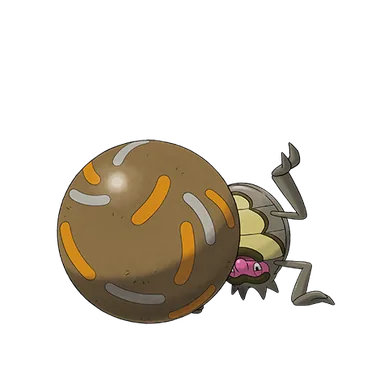
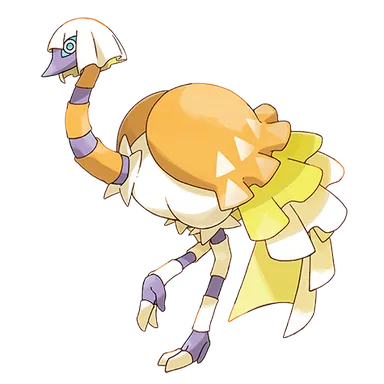
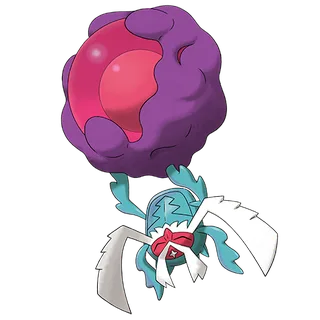
Rabsca is a Bug/Psychic-type Pokémon introduced in Generation IX and a final stage of its evolution line, with a base stat total of 470.
Rabsca


Abilities
Passes on status problems.
Anticipates an ally’s attack and dodges it.
Hidden AbilityBase Stats
Rabsca's Weaknesses and Resistances





Evolution Chain
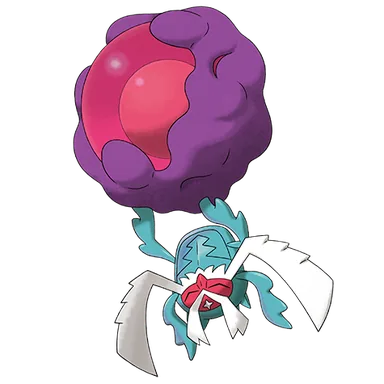
Rellor evolves into Rabsca by walk 1000 steps in Let's Go mode, then level up.
 Rellor
 Rabsca
 Playthrough, Competitive, and Nuzlocke Usage
Using Rabsca in a Playthrough
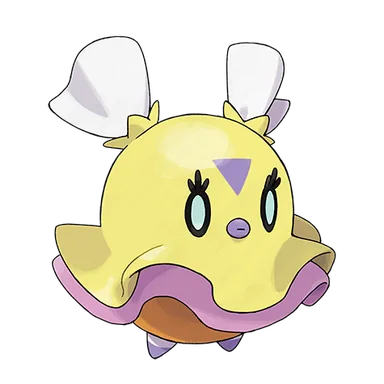
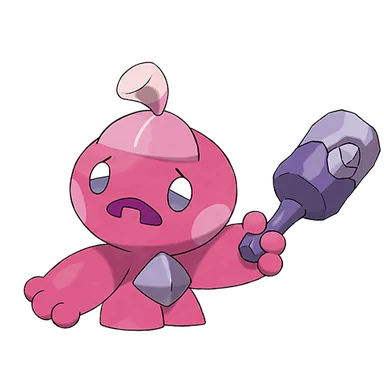
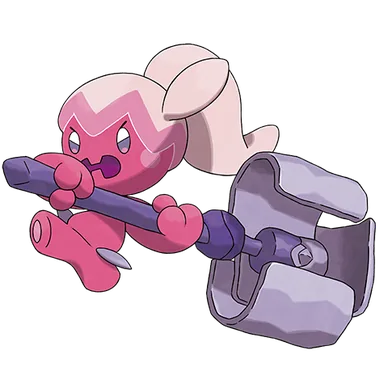
Rellor is found in the Asado Desert and begins as a very weak Bug-type with only a 270 base-stat total, so the line's real value appears after evolution. Like Bramblin and Pawmo, Rellor evolves through Scarlet and Violet's Let's Go! walking mechanic: after walking 1,000 steps with Rellor outside its Poké Ball, it must level up while still outside to become Rabsca. Rabsca changes to Bug/Psychic and becomes a slow special attacker and support Pokémon, with base 115 Special Attack, 100 Special Defense, 85 Defense, and only 45 Speed. Psychic and Bug STAB can be backed by coverage such as Earth Power or Dazzling Gleam, while Recover, Trick Room, screens, Memento, and other support options let Rabsca contribute without relying only on damage. Its most famous move is Revival Blessing, which can restore a fainted party member to half HP in ordinary play; that effect is mechanically extraordinary but depends heavily on the rules of the challenge or format being played. Quiet is especially appropriate for Trick Room builds because Rabsca naturally benefits from being slow, while Modest can maximize normal special attacking and Bold or Calm can suit support-focused sets.
Rabsca in Competitive Pokémon
Rabsca is currently listed in ZU in Scarlet/Violet, but it attracted immediate competitive attention at Generation IX's launch because it combines Trick Room with the then-new Revival Blessing. Revival Blessing's ability to return a fainted teammate at half health created early controversy, and players quickly explored Leppa Berry and Sleep Talk interactions to obtain additional revivals, making the move itself a central topic of early SV tiering discussion even though Rabsca was never a dominant general-purpose Pokémon. In more conventional use, Rabsca can set Trick Room, use Recover to remain functional, attack from base 115 Special Attack, and employ Revival Blessing to restore an important teammate; Telepathy additionally has doubles value because it avoids damage from allied spread attacks such as Earthquake. The line has also appeared on successful ranked-ladder VGC teams, including Regulation C constructions that used Rabsca specifically for Trick Room and Revival Blessing support, showing that its niche was real even if narrow. Its weaknesses explain why that niche never translated into a high usage tier: base 45 Speed is helpful only under Trick Room, Bug/Psychic leaves six weaknesses, it can become passive when its support moves are not immediately valuable, and stronger dedicated setters or attackers often fit teams more easily. Consequently, its current ZU placement is consistent with its history as a specialized support Pokémon whose unique move can swing individual games without making Rabsca broadly efficient in standard singles.
Rabsca in Nuzlockes
Rellor is one of the more dangerous Pokémon in this batch to carry unevolved because its stats are extremely low, so the 1,000-step evolution requirement is worth completing before exposing it to serious trainer battles. Rabsca's much better defenses and Special Attack make it a legitimate team member, but its base 45 Speed means it will often take a hit before acting outside Trick Room, increasing the importance of known matchups and careful switching. Recover substantially improves long-term survival, and its 4× resistance to Fighting plus resistances to Grass, Ground, and Psychic can create useful defensive entries, but six weaknesses to Bug, Flying, Rock, Ghost, Fire, and Dark make blind switching hazardous. Trick Room can reverse the Speed disadvantage for Rabsca and slower teammates, though spending a turn setting it carries its own risk if the opponent can deal heavy damage immediately. Revival Blessing is normally incompatible with conventional Nuzlocke rules because a fainted Pokémon is considered permanently dead even if the game engine permits revival; if a custom ruleset explicitly allows the move, it becomes one of the strongest emergency resources available. Synchronize can punish certain opposing status users by reflecting burn, poison, or paralysis, but it does not prevent Rabsca from suffering the status itself, so it should not be treated as a substitute for status immunity.
Learnsets
76 moves · Scarlet Violet
Level Up




Machine





Egg
Pokédex Entries
2 entries
The body that supports the ball barely moves. Therefore, it is thought that the true body of this Pokémon is actually inside the ball.
An infant sleeps inside the ball. Rabsca rolls the ball soothingly with its legs to ensure the infant sleeps comfortably.
Additional Images
PokeAPI sprites
Open this section to load extra PokeAPI sprite images.
Rabsca Biology and Behavior
Rabsca carries a large ball above its body while the body supporting it moves very little, leading the Scarlet Pokédex to suggest that the Pokémon's true body may actually be inside the sphere. Violet clarifies that an infant sleeps within the ball and that Rabsca gently rotates it with its legs to keep the infant comfortable. The infant is visibly represented inside the translucent ball in Rabsca's game model, reinforcing that the sphere is not merely an external tool. Its biology therefore centers on protecting and soothing developing young rather than the mud-ball construction behavior of Rellor.
Rabsca Biological Data
- National Pokédex
- #954
- Species
- Rolling Pokémon
- Height
- 1' 0" (0.3 m)
- Weight
- 7.7 lbs (3.5 kg)
- Habitat
- Currently Unknown
- Color
- Green
- Body Style
- Armor
- Gender
- 50% female / 50% male
Misc
Catch Rate: 45
Base Experience: 165 Exp
Hatch Counter: 20
Rabsca Size Comparison: BETA
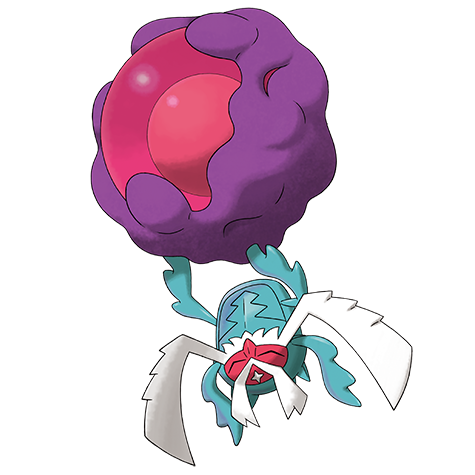
Rabsca is listed at 1' 0" (0.3 m) and shown in an in-chart visual comparison.

How is visual size determined?
Pokédex height is treated as the official listed measurement, but the chart uses pose-aware visual scaling so each sprite looks reasonable in a direct comparison.
For long or coiled Pokémon, the listed height may represent total body length rather than upright height. For Pokémon with floppy ears, leaves, feathers, antennae, wings, or other flexible features, the chart usually measures to the top of the solid, substantial part of the head or body instead of the tallest decorative feature.
The goal is not to replace the official height, but to make the artwork compare naturally at the size it appears to occupy.