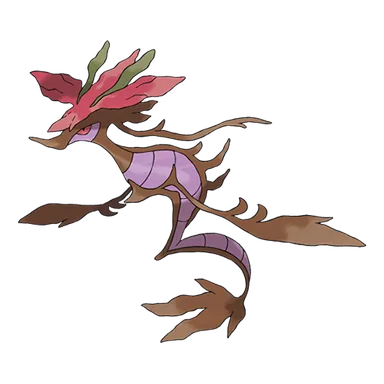
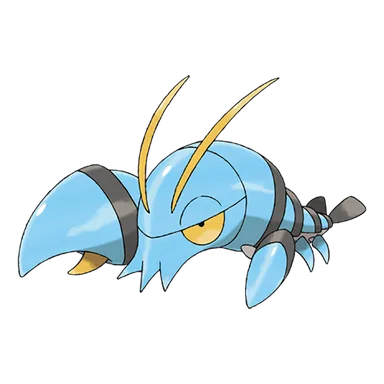
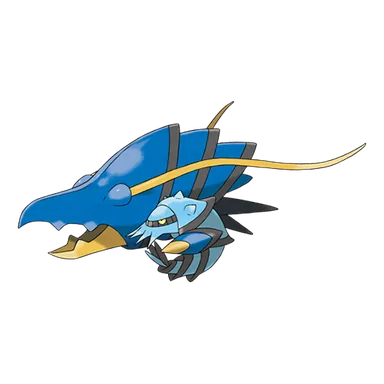
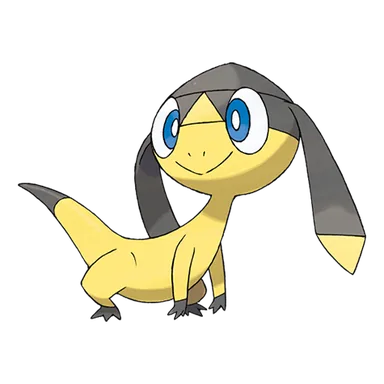
Skrelp is a Poison/Water-type Pokémon introduced in Generation VI and the first stage of its evolution line, with a base stat total of 320.
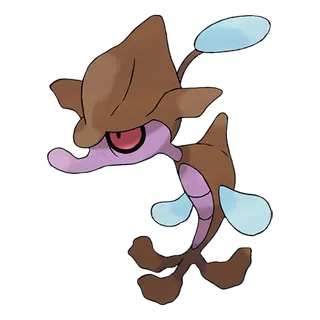
Skrelp


Abilities
Poisons foe on contact.
May poison targets when a Pokémon makes contact.
Powers up moves of the same type.
Hidden AbilityBase Stats
Skrelp's Weaknesses and Resistances







Evolution Chain
Skrelp evolves into Dragalge at level 48.
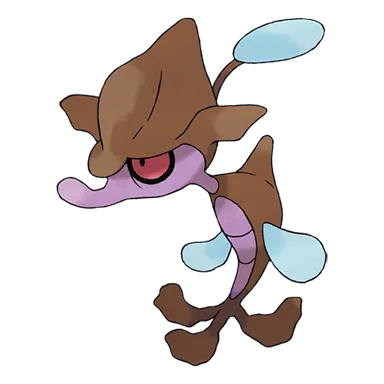 Skrelp
 Dragalge

Skrelp Playthrough, Competitive, and Nuzlocke Usage
Using Skrelp in a Playthrough
Skrelp evolves into Dragalge at level 48, making the family a relatively late-evolving option whose final form is much more durable than the unevolved stage. Standard Dragalge is Poison/Dragon with base 123 Special Defense, 97 Special Attack, and only base 44 Speed; Draco Meteor or Dragon Pulse and Sludge Bomb or Sludge Wave provide strong dual STAB, while Surf, Hydro Pump, Focus Blast, Thunderbolt, Toxic Spikes, Flip Turn in later games, and other coverage or support give it substantial flexibility. Poison Point can poison contact attackers, Poison Touch can poison targets struck by contact moves, and the Hidden Ability Adaptability increases STAB from 1.5× to 2×, turning Dragalge's Draco Meteor and Poison attacks into genuinely powerful wallbreaking tools. Poison/Dragon resists Fire, Water, Electric, Grass, Fighting, Poison, and Bug while taking only neutral damage from Fairy, but Ground, Psychic, Ice, and Dragon are super effective. Mega Dragalge keeps Poison/Dragon typing and base 44 Speed but rises to 132 Special Attack, 105 Defense, and an enormous 163 Special Defense; in current ability-enabled formats it gains Regenerator, restoring one-third of its maximum HP whenever it switches out. Modest or Quiet are ideal for offense, while Calm is excellent for exploiting either form's exceptional special bulk.
Skrelp in Competitive Pokémon
Standard Dragalge developed a meaningful XY competitive niche despite its very low Speed. Adaptability raises the power of its Poison- and Dragon-type STAB to exceptional levels, and Choice Specs Draco Meteor or Sludge Wave could heavily damage even neutral targets while Toxic Spikes and excellent special bulk allowed defensive sets to contribute in other ways. Smogon placed Dragalge in RUBL but documented real OU use because Poison/Dragon typing let it check threats such as Keldeo, Clefable, Rotom-W, Mega Venusaur, and several special attackers while remaining offensively dangerous. It became a solid RU Pokemon in later generations with much the same identity: a slow tank that can either absorb special attacks or force progress with Adaptability. Mega Dragalge is a major modern upgrade rather than a simple extension of that history. Current Champions data places Mega Dragalge in OU with 132 Special Attack, 163 Special Defense, 105 Defense, and Regenerator, shifting the family from an Adaptability wallbreaker toward an extraordinarily resilient special tank and pivot that can repeatedly recover by switching.
Skrelp in Nuzlockes
Dragalge is extremely useful in Nuzlockes once Skrelp survives to level 48 because its typing and base 123 Special Defense make many special matchups very safe. Reliable Sludge Bomb or Dragon Pulse is usually preferable to lower-accuracy or stat-dropping options when maximum damage is unnecessary, while Toxic Spikes can support long boss fights without exposing Dragalge every turn. Ground, Psychic, Ice, and Dragon attacks remain dangerous, and base 44 Speed means Dragalge usually takes the first hit outside Trick Room. Adaptability can shorten fights dramatically but does not improve survivability, whereas Poison Point can occasionally punish contact attackers without requiring a turn. Mega Dragalge improves both defenses and Special Attack substantially, and Regenerator in current ability-enabled formats makes switching an unusually strong source of healing, but the same four type weaknesses remain. Calm is especially safe for special tanking, while Modest or Quiet better exploit the offensive side.
Learnsets
58 moves · Scarlet Violet
Level Up




Machine


Egg
Pokédex Entries
6 entries
Camouflaged as rotten kelp, they spray liquid poison on prey that approaches unawares and then finish it off.
It looks just like rotten kelp. It hides from foes while storing up power for its evolution.
It vanishes into seaweed and remains perfectly still to avoid attacks from large Pokémon. Rotten seaweed is its main food source.
It’s not good at swimming, so it clings to the seaweed. In the Alola region, it’s often found near Dhelmise.
It drifts in the ocean, blending in with floating seaweed. When other Pokémon come to feast on the seaweed, Skrelp feasts on them instead.
Skrelp looks like a piece of rotten seaweed, so it can blend in with seaweed drifting on the ocean and avoid being detected by enemies.
Where To Find Skrelp
3 locations
Ambrette Town · KalosGood Rod · version details vary
Ambrette Town
Cyllage City · KalosGood Rod · version details vary
Cyllage City
Route 8 · KalosGood Rod · version details vary
Road 8
Additional Images
PokeAPI sprites
Open this section to load extra PokeAPI sprite images.
Skrelp Biology and Behavior
Skrelp is a poor swimmer that survives by mimicking rotten seaweed and drifting among kelp beds. It eats decaying seaweed and uses material from that diet to produce its poison, then ambushes prey that approaches what appears to be harmless vegetation. During storms it can be washed far from its home because it lacks strong swimming ability, and it sometimes travels by clinging to or riding floating seaweed. Skrelp is also known to coexist peacefully with Dhelmise despite both species living among drifting marine vegetation.
Skrelp Biological Data
- National Pokédex
- #690
- Species
- Mock Kelp Pokémon
- Height
- 1' 8" (0.5 m)
- Weight
- 16.1 lbs (7.3 kg)
- Habitat
- Currently Unknown
- Color
- Brown
- Body Style
- Blob
- Gender
- 50% female / 50% male
Misc
Catch Rate: 225
Base Experience: 64 Exp
Hatch Counter: 20
Skrelp Size Comparison: BETA
Skrelp is listed at 1' 8" (0.5 m) and shown in an in-chart visual comparison.
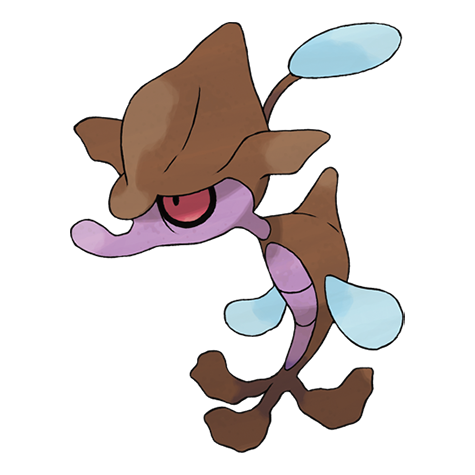

How is visual size determined?
Pokédex height is treated as the official listed measurement, but the chart uses pose-aware visual scaling so each sprite looks reasonable in a direct comparison.
For long or coiled Pokémon, the listed height may represent total body length rather than upright height. For Pokémon with floppy ears, leaves, feathers, antennae, wings, or other flexible features, the chart usually measures to the top of the solid, substantial part of the head or body instead of the tallest decorative feature.
The goal is not to replace the official height, but to make the artwork compare naturally at the size it appears to occupy.