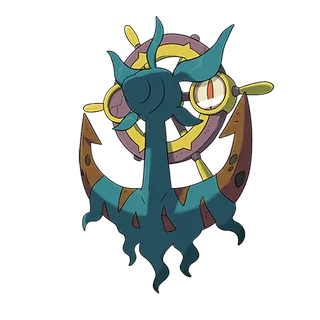
Dhelmise is a Ghost/Grass-type Pokémon introduced in Generation VII, with a base stat total of 517 and no standard evolutions.
Dhelmise


Abilities
Powers up Steel-type moves.
Base Stats
Dhelmise's Weaknesses and Resistances







Evolution Chain
Dhelmise does not evolve into or from any other Pokémon.
 Dhelmise
 Playthrough, Competitive, and Nuzlocke Usage
Using Dhelmise in a Playthrough
Dhelmise is a single-stage Ghost/Grass physical attacker with base 131 Attack, 100 Defense, and 90 Special Defense, but only base 40 Speed, making it a slow powerhouse rather than a conventional cleaner. In Sun and Moon it is found very late by fishing in Seafolk Village and has only a 1% ordinary fishing rate, though bubbling spots raise the chance; Ultra Sun and Ultra Moon improve the bubbling-spot rate substantially, while Sword and Shield make the species easier to encounter on Route 9 and through later fishing or raid areas. Ghost/Grass grants immunities to Normal and Fighting and resistances to Water, Electric, Grass, and Ground, while weaknesses to Fire, Ice, Flying, Ghost, and Dark mean it still requires thoughtful switching despite its strong bulk. Steelworker increases the power of Steel-type attacks by 50%, effectively giving Dhelmise a third STAB-like attacking type without actually granting Steel's defensive resistances; Anchor Shot therefore complements physical Ghost and Grass attacks unusually well. Rapid Spin gives it hazard-removal utility and became stronger from Generation VIII onward when the move was raised to 50 power and began increasing Speed, while Synthesis can provide recovery in generations where available. Power Whip is extremely strong but its 85% accuracy creates more variance than a normal playthrough always needs, so safer Grass options can be preferable when the extra damage is unnecessary; Adamant maximizes Dhelmise's huge Attack, while Brave is natural on Trick Room teams.
Dhelmise in Competitive Pokémon
Dhelmise carved out a durable lower-tier competitive niche because it combines hazard removal, spinblocking, strong natural bulk, and genuine offensive pressure in a single slot. In Generation VII it was an NU Pokémon capable of switching into many common Stealth Rock setters, using Rapid Spin to remove hazards while its Ghost typing simultaneously prevented opposing Rapid Spin, and threatening bulky targets with base 131 Attack. Steelworker made Anchor Shot and other Steel attacks hit with pseudo-STAB power, while Choice Band sets could punish even dedicated physical walls rather than allowing opponents to treat Dhelmise as a passive utility spinner. Sword and Shield again placed Dhelmise in NU, where Synthesis, Rapid Spin, Poltergeist or other Ghost STAB, Power Whip, and Steelworker coverage preserved the same core identity; Rapid Spin's Speed boost gave the otherwise base-40 Pokémon an additional reward for successfully clearing hazards. Its weaknesses have also remained consistent: poor Speed, several common weaknesses, vulnerability to Knock Off and strong special attackers, and competition from faster or more reliable hazard removers keep it from becoming a higher-tier staple. Dhelmise is unavailable in standard Scarlet and Violet, so it has no ordinary Generation IX usage-tier chapter outside National Dex formats.
Dhelmise in Nuzlockes
Dhelmise is valuable in a Nuzlocke because its Normal and Fighting immunities can create completely safe switches, while base 100 Defense and 90 Special Defense give it enough bulk to survive many neutral attacks. Steelworker is purely offensive and does not make Dhelmise a Steel-type defensively, so expecting Steel resistances against Fairy, Flying, Ice, or other attacks can lead to a fatal matchup error. Anchor Shot is reliable physical coverage and can trap an opponent, while Rapid Spin can remove entry hazards that would otherwise accumulate dangerous chip damage across the entire team. Power Whip's enormous damage is attractive but its 85% accuracy is a significant permadeath risk, especially when a lower-power accurate Grass move would still secure the knockout. Synthesis provides useful recovery where available, although weather and PP limitations can affect how dependable that healing is over a long route. Base 40 Speed means Dhelmise normally takes the first hit, so strong Fire-, Ice-, Flying-, Ghost-, and Dark-type coverage should be identified before committing it to battle despite its generally good raw defenses.
Learnsets
18 moves · Sword Shield
Level Up — Sword Shield




Pokédex Entries
6 entries
Swinging its massive anchor, it can KO Wailord in a single blow. What appears to be green seaweed is actually its body.
The soul of seaweed adrift in the waves became reborn as this Pokémon. It maintains itself with new infusions of seabed detritus and seaweed.
It wraps its prey in green seaweed and sucks away their vitality. It only likes to go after big prey like Wailord.
Its chain-like green seaweed can stretch outward for hundreds of yards. For some reason, it gets along well with Skrelp.
After a piece of seaweed merged with debris from a sunken ship, it was reborn as this ghost Pokémon.
After lowering its anchor, it waits for its prey. It catches large Wailord and drains their life-force.
Where To Find Dhelmise
1 locations
Seafolk Village · AlolaBubbling Spots, Super Rod · version details vary
Seafolk Village Main
Additional Images
PokeAPI sprites
Open this section to load extra PokeAPI sprite images.
Dhelmise Biology and Behavior
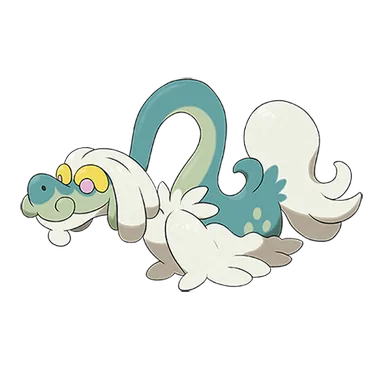
The anchor and ship's wheel associated with Dhelmise are not its true body; the living Pokémon is the ghostly mass of green seaweed wrapped through and around the wreckage. Pokédex accounts describe seaweed adrift in the ocean becoming reborn as this Ghost-type after merging with debris from a sunken ship, and Dhelmise continually maintains itself by incorporating new seaweed and seabed detritus. It actively hunts very large prey such as Wailmer and Wailord, swinging the attached anchor with enough force to knock out even Wailord before wrapping the victim in seaweed and draining its life force. The chain-like seaweed can stretch for hundreds of yards, giving the otherwise heavy-looking species an enormous effective reach. Despite this predatory behavior, Dhelmise is specifically known to get along well with Skrelp and Dragalge.
Dhelmise Biological Data
- National Pokédex
- #781
- Species
- Sea Creeper Pokémon
- Height
- 12' 10" (3.9 m)
- Weight
- 463.0 lbs (210.0 kg)
- Habitat
- Currently Unknown
- Color
- Green
- Body Style
- Blob
- Gender
- Genderless
Misc
Catch Rate: 25
Base Experience: 181 Exp
Hatch Counter: 25
Dhelmise Size Comparison: BETA
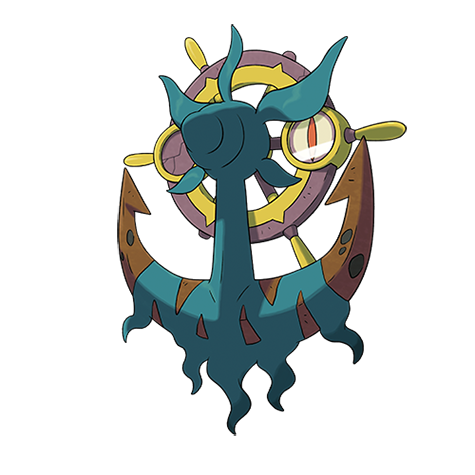
Dhelmise is listed at 12' 10" (3.9 m); this chart uses a pose-adjusted visual scale.

How is visual size determined?
Pokédex height is treated as the official listed measurement, but the chart uses pose-aware visual scaling so each sprite looks reasonable in a direct comparison.
For long or coiled Pokémon, the listed height may represent total body length rather than upright height. For Pokémon with floppy ears, leaves, feathers, antennae, wings, or other flexible features, the chart usually measures to the top of the solid, substantial part of the head or body instead of the tallest decorative feature.
The goal is not to replace the official height, but to make the artwork compare naturally at the size it appears to occupy.
Dhelmise currently uses a pose-adjusted visual scale.