Gliscor is a Ground/Flying-type Pokémon introduced in Generation IV and a final stage of its evolution line, with a base stat total of 510.
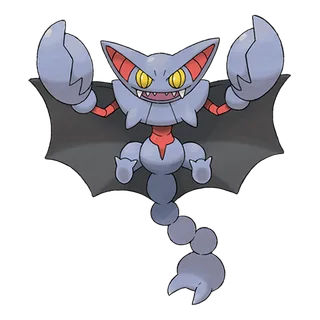
Gliscor


Abilities
Prevents ATTACK reduction.
Ups evasion in a sandstorm.
Restores HP if the Pokémon is poisoned.
Hidden AbilityBase Stats
Gliscor's Weaknesses and Resistances






Evolution Chain
Gligar evolves into Gliscor by leveling up holding Razor Fang during the night.
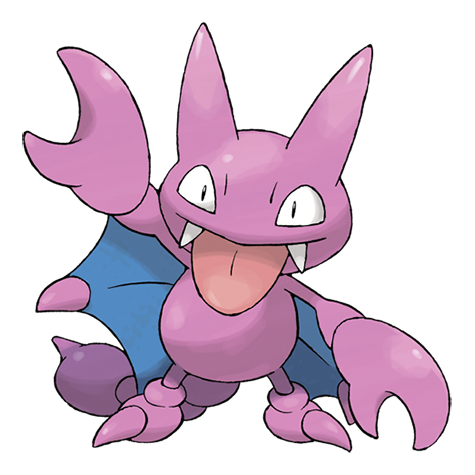 Gligar
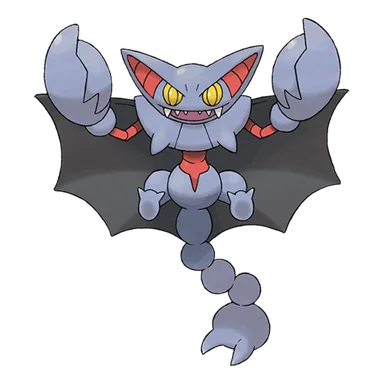 Gliscor
 Playthrough, Competitive, and Nuzlocke Usage
Using Gliscor in a Playthrough
The Gligar line combines one of the strongest defensive type pairings available to a physical Pokemon with excellent Defense, useful Speed, and reliable Ground offense. Ground/Flying typing gives Gligar and Gliscor complete immunities to both Electric and Ground attacks, useful resistances to Fighting, Bug, and Poison, and only two weaknesses—Water and a dangerous quadruple weakness to Ice. Gligar itself is already unusually sturdy for an unevolved Pokemon with base 105 Defense and respectable Speed, but from Generation IV onward it can evolve into Gliscor by leveling at night while holding a Razor Fang, although access to that item can be late or inconvenient in some games. Gliscor improves to base 125 Defense, 95 Attack, and 95 Speed, making Earthquake, Swords Dance, U-turn, Knock Off, Roost, and various utility moves fit naturally with its stats. Poison Heal can make Gliscor exceptionally durable when legitimately available, but because it is a Hidden Ability in many games a normal playthrough should not assume access to it.
Gliscor in Competitive Pokémon
Gliscor has been one of the most consistently successful defensive and utility Pokemon introduced through a later evolution, with repeated high-tier relevance built around excellent typing, physical bulk, and an enormous support movepool. Its defining modern ability is Poison Heal: when poisoned, Gliscor restores one-eighth of its maximum HP each turn and cannot be afflicted with another major status condition, making Toxic Orb both a recovery engine and a form of status protection. This combination has supported everything from Swords Dance wallbreakers to stallbreakers, Stealth Rock or Defog users, Knock Off and U-turn utility sets, and extremely durable defensive pivots. Smogon has described Gliscor as a defining presence in formats such as Generation VII OU because Poison Heal, Roost, Ground/Flying typing, and its broad movepool make it unusually difficult for passive teams to wear down. Its most exploitable flaw is the quadruple Ice weakness, while strong special Water or neutral attacks can also overwhelm its weaker special side if Gliscor is asked to absorb too much.
Gliscor in Nuzlockes
Gligar is already a strong Nuzlocke encounter because high physical Defense and dual Electric and Ground immunities create many predictable, completely safe switching opportunities. Its defensive profile is easy to understand but unforgiving at the extremes: Water attacks are dangerous and Ice attacks are potentially catastrophic because the line takes quadruple damage from them. Gliscor substantially improves the line's Attack and overall physical durability while retaining good Speed, making it capable of both absorbing physical hits and ending favorable matchups efficiently with Earthquake or coverage. Poison Heal is exceptional in a Nuzlocke if legitimately available because controlled poisoning becomes passive recovery and protects Gliscor from other status, but Hidden Ability availability varies enough that it should be treated as a bonus rather than an assumed feature. The Razor Fang evolution requirement can also delay access to Gliscor in some games, leaving the still-usable Gligar as the practical endpoint for part or all of a run.
Learnsets
85 moves · Scarlet Violet
Level Up





Machine



Egg
Pokédex Entries
5 entries
It observes prey while hanging inverted from branches. When the chance presents itself, it swoops!
If it succeeds in catching even a faint breeze properly, it can circle the globe without flapping once.
Its flight is soundless. It uses its lengthy tail to carry off its prey... Then its elongated fangs do the rest.
It dances silently through the sky. When it approaches prey, it can land a critical hit in an instant.
It glides soundlessly on pitch-black wings and sinks sharp fangs into the throat of its prey. It takes on a look of satisfaction once it has entirely drained its prey of blood.
Where To Find Gliscor
3 locations
Route 11 · UnovaGrass Spots · version details vary
Road 11
Route 15 · UnovaGrass Spots · version details vary
Road 15
Route 23 · UnovaGrass Spots · version details vary
Road 23
Additional Images
PokeAPI sprites
Open this section to load extra PokeAPI sprite images.
Gliscor Biology and Behavior
Gliscor is a nocturnal ambush predator that often hangs upside down from trees while watching for prey before launching into a nearly silent glide. Unlike Gligar's more general feeding behavior, Gliscor is explicitly described as feeding on the blood of other Pokemon, seizing victims with its tail and biting into the neck with long fangs until the prey is drained. Its wings are better suited to gliding than sustained flapping flight, so Gliscor climbs high trees or uses winds and updrafts to gain altitude before traveling between locations. It can also use echolocation-like sound waves to avoid obstacles and is highly resistant to poisonous substances. When resting, Gliscor sleeps hanging upside down, reinforcing the batlike habits suggested by its appearance and nocturnal lifestyle.
Gliscor Biological Data
- National Pokédex
- #472
- Species
- Fang Scorpion Pokémon
- Height
- 6' 7" (2.0 m)
- Weight
- 93.7 lbs (42.5 kg)
- Habitat
- Currently Unknown
- Color
- Purple
- Body Style
- Wings
- Gender
- 50% female / 50% male
Misc
Catch Rate: 30
Base Experience: 179 Exp
Hatch Counter: 20
Gliscor Size Comparison: BETA
Gliscor is listed at 6' 7" (2.0 m) and shown in an in-chart visual comparison.
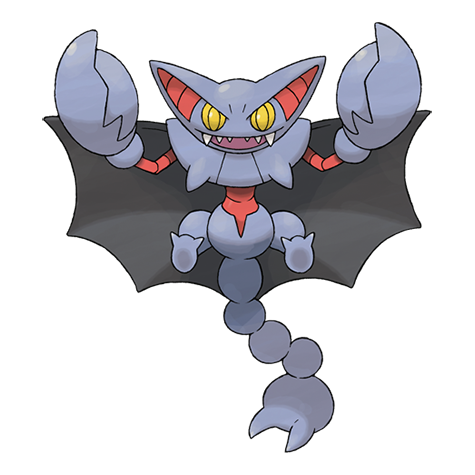

How is visual size determined?
Pokédex height is treated as the official listed measurement, but the chart uses pose-aware visual scaling so each sprite looks reasonable in a direct comparison.
For long or coiled Pokémon, the listed height may represent total body length rather than upright height. For Pokémon with floppy ears, leaves, feathers, antennae, wings, or other flexible features, the chart usually measures to the top of the solid, substantial part of the head or body instead of the tallest decorative feature.
The goal is not to replace the official height, but to make the artwork compare naturally at the size it appears to occupy.