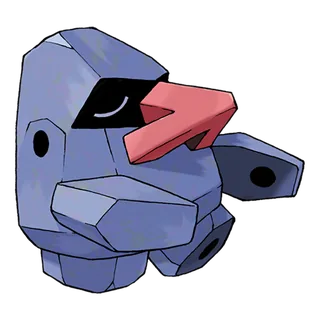
Nosepass is a Rock-type Pokémon introduced in Generation III and the first stage of its evolution line, with a base stat total of 375.
Nosepass

Abilities
Negates 1-hit KO attacks.
Traps STEEL-type POKéMON.
Boosts certain moves’ power in a sandstorm.
Hidden AbilityBase Stats
Nosepass's Weaknesses and Resistances







Evolution Chain
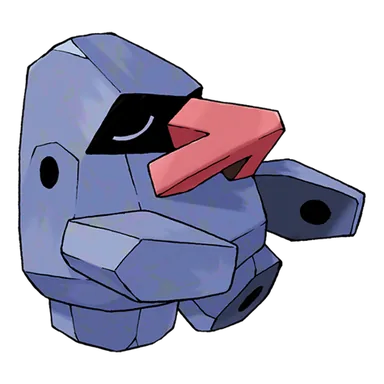
Nosepass evolves into Probopass by leveling up at Mt Coronet or with a Thunder Stone.
 Nosepass
 Probopass
Nosepass Playthrough, Competitive, and Nuzlocke Usage
Using Nosepass in a Playthrough
Nosepass begins as an extremely slow pure Rock Pokemon whose base 135 Defense and 90 Special Defense make it sturdier than its tiny base 30 HP initially suggests, but poor offenses and base 30 Speed can make ordinary battles slow. In Generation III Nosepass has no evolution and is primarily a defensive novelty, while Generation IV introduces Probopass, obtained historically by leveling Nosepass in a special magnetic field; from Pokemon Legends: Arceus onward a Thunder Stone can also trigger the evolution in supported games. Probopass becomes Rock/Steel and reaches base 145 Defense and 150 Special Defense, gaining numerous resistances and a Poison immunity but also acquiring quadruple weaknesses to both Fighting and Ground plus a Water weakness. Its offense remains modest, yet Power Gem or Flash Cannon, Earth Power, Thunderbolt, Volt Switch, Stealth Rock, Thunder Wave, and other support moves can make it a useful defensive utility Pokemon in later games. Sturdy provides valuable emergency insurance from full HP in modern generations, while Magnet Pull can trap opposing Steel-types, but Probopass is best used only when its severe Fighting and Ground weaknesses are safely accounted for.
Nosepass in Competitive Pokémon
Probopass has generally remained a lower-tier competitive Pokemon, but its extreme mixed defenses and Magnet Pull give it a genuine niche that goes beyond simply setting Stealth Rock. Magnet Pull prevents opposing Steel-types from switching, allowing Probopass to trap selected targets and eliminate or weaken them with Earth Power, Hidden Power in older generations, or other coverage so that teammates no longer have to break through those Steel-type walls. Its low base 40 Speed also makes Volt Switch useful because Probopass can absorb an attack and then bring a frailer teammate into battle safely after the opponent has already moved. Sturdy provides an alternative utility role by helping guarantee Stealth Rock or another crucial action from full HP, and the 145 Defense and 150 Special Defense stats allow it to check selected Normal-, Flying-, Psychic-, Fairy-, Ice-, Rock-, and Dragon-type attackers. The drawbacks are severe: quadruple Fighting and Ground weaknesses, a Water weakness, low HP, weak offensive stats, and no reliable recovery make Probopass easy to exploit when the opponent carries the correct coverage.
Nosepass in Nuzlockes
Nosepass and Probopass can be useful defensive Nuzlocke specialists, but their safety depends much more on typing than their enormous Defense numbers might suggest. Nosepass is slow and weak offensively, yet pure Rock typing and high defenses can make known Normal-, Flying-, Poison-, and Fire-related physical matchups manageable while Sturdy in later generations may provide emergency protection. Probopass dramatically increases both defenses and gains many Steel-type resistances, but the new quadruple Fighting and Ground weaknesses are dangerous enough that an unexpected Brick Break, Low Kick, Earthquake, or similar coverage move can cause an immediate loss. Its slow Volt Switch can be an excellent safety tool in games where available, allowing Probopass to take the incoming attack before bringing a teammate into battle without exposing that teammate on the switch. The evolution method can also restrict usefulness in specific games, so a Nuzlocke player should confirm whether a magnetic evolution area or later Thunder Stone method is actually available before planning around Probopass.
Learnsets
64 moves · Scarlet Violet
Level Up





Machine


Egg
Pokédex Entries
16 entries
NOSEPASS’s magnetic nose is always pointed to the north. If two of these POKéMON meet, they cannot turn their faces to each other when they are close because their magnetic noses repel one another.
NOSEPASS had been said to be completely unmoving, with its magnetic nose pointed due north. However, close observation has revealed that the POKéMON actually moves by a little over 3/8 of an inch every year.
Its body emits a powerful magnetism. It feeds on prey that is pulled in by the force. Its magnetism is stronger in cold seasons.
Its magnetic nose consistently faces north. Travelers check NOSEPASS to get their bearings.
Its nose is a magnet. As a result, this Pokémon always keeps its face pointing north.
When endangered, it may protect itself by raising its magnetism and drawing iron objects to its body.
If two of these meet, they cannot get too close because their noses repel each other.
Its magnetic nose always faces north and draws iron objects to its body to protect itself better.
Its magnetic nose consistently faces north. Travelers check Nosepass to get their bearings.
Nosepass’s magnetic nose is always pointed to the north. If two of these Pokémon meet, they cannot turn their faces to each other when they are close because their magnetic noses repel one another.
Nosepass had been said to be completely unmoving, with its magnetic nose pointed due north. However, close observation has revealed that the Pokémon actually moves by a little over 3/8 of an inch every year.
The magnet in Nosepass’s nose provides an unerring compass, making it an excellent partner for Trainers going on a journey.
It uses powerful magnetism to drag its prey toward it. It’s also been known to pull in metal, which it collects and uses to protect itself.
It moves less than an inch a year, but when it’s in a jam, it will spin and drill down into the ground in a split second.
It hunts without twitching a muscle by pulling in its prey with powerful magnetism. But sometimes it pulls natural enemies in close.
Once the people of Hisui discovered that its red nose always points north, they grew to rely on it greatly when traveling afar. The nose seems to work in a similar way to ancient compasses.
Where To Find Nosepass
16 locations
Akala Outskirts · AlolaWalking · version details vary
Akala Outskirts Area
Granite Cave · HoennRock Smash · version details vary
Granite Cave (B2F)
Friend Safari · KalosWalking · version details vary
Friend Safari (Rock)
Route 10 · KalosHorde · version details vary
Road 10
Pokespot · OrreSnag · version details vary
Cave Pokespot
Oasis Pokespot
Rock Pokespot
Pyrite Town · OrreSnag · version details vary
Pyrite Town Colosseum
Realgam Tower · OrreSnag · version details vary
Realgam Tower Colosseum
Mt. Coronet · SinnohWalking · version details vary
Mount Coronet (1F from exterior)
Mount Coronet (1F Road 207)
Mount Coronet (1F Road 211)
Mount Coronet (1F Road 216)
Mount Coronet (2F)
Mount Coronet (3F)
Mount Coronet (4F small room)
Mount Coronet (4F)
Mount Coronet (5F)
Mount Coronet (6F)
Mount Coronet (B1F)
Mount Coronet (exterior blizzard)
Mount Coronet (exterior snowfall)
Route 206 · SinnohWalking · version details vary
Road 206
Chargestone Cave · UnovaWalking · version details vary
Chargestone Cave (1F)
Chargestone Cave (B1F)
Chargestone Cave (B2F)
Clay Tunnel · UnovaWalking · version details vary
Clay Tunnel
Glacier Room · UnovaWalking · version details vary
Glacier Room
Iron Room · UnovaWalking · version details vary
Iron Room
Rocky Mountain Room · UnovaWalking · version details vary
Rocky Mountain Room
Route 6 · UnovaHidden Grotto · version details vary
Unova Route 6 (Hidden Grotto – Mistralton Cave)
Underground Ruins · UnovaWalking · version details vary
Underground Ruins
Held Items
2 items
- Diamond: 5% chance
- Pearl: 5% chance
- Platinum: 5% chance
- Heartgold: 5% chance
- Soulsilver: 5% chance
- Black: 5% chance
- White: 5% chance
- Black 2: 5% chance
- White 2: 5% chance
- X: 5% chance
- Y: 5% chance
- Omega Ruby: 5% chance
- Alpha Sapphire: 5% chance
- Sun: 5% chance
- Moon: 5% chance
- Ultra Sun: 5% chance
- Ultra Moon: 5% chance
Additional Images
PokeAPI sprites
Open this section to load extra PokeAPI sprite images.
Nosepass Biology and Behavior
Nosepass is a living piece of extremely durable volcanic-like rock whose bright red nose functions as a powerful electromagnet and naturally points toward magnetic north. Its orientation is so dependable that travelers historically used wild Nosepass as living compasses when navigating caves and remote terrain. The Pokemon normally moves almost unbelievably slowly - Pokedex accounts describe displacement of only a little more than three-eighths of an inch in an entire year - but in an emergency it can spin its body into the ground like a drill. Its magnetism becomes stronger during colder seasons and can be increased deliberately to pull iron objects toward its body for defense or to capture prey, although doing so may also attract natural enemies such as Metang. Strong magnetic repulsion makes it difficult for Nosepass to approach others of its own kind closely, giving an otherwise nearly motionless cave species an unusual social limitation created directly by its own anatomy.
Nosepass Biological Data
- National Pokédex
- #299
- Species
- Compass Pokémon
- Height
- 3' 3" (1.0 m)
- Weight
- 213.8 lbs (97.0 kg)
- Habitat
- Cave
- Color
- Gray
- Body Style
- Humanoid
- Gender
- 50% female / 50% male
Misc
Catch Rate: 255
Base Experience: 75 Exp
Hatch Counter: 20
Nosepass Size Comparison: BETA
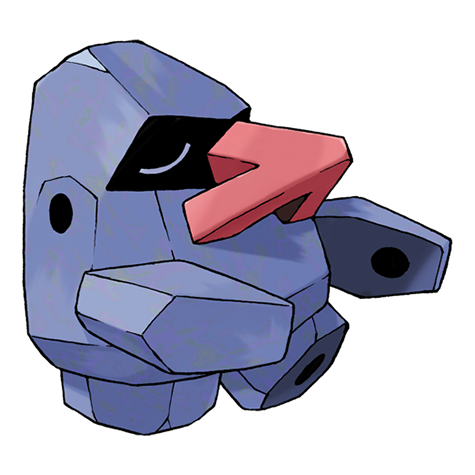
Nosepass is listed at 3' 3" (1.0 m) and shown in an in-chart visual comparison.

How is visual size determined?
Pokédex height is treated as the official listed measurement, but the chart uses pose-aware visual scaling so each sprite looks reasonable in a direct comparison.
For long or coiled Pokémon, the listed height may represent total body length rather than upright height. For Pokémon with floppy ears, leaves, feathers, antennae, wings, or other flexible features, the chart usually measures to the top of the solid, substantial part of the head or body instead of the tallest decorative feature.
The goal is not to replace the official height, but to make the artwork compare naturally at the size it appears to occupy.