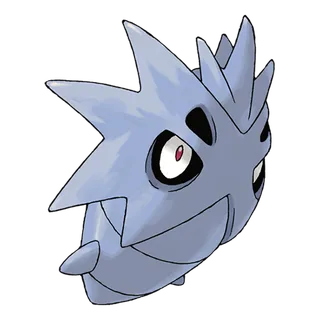
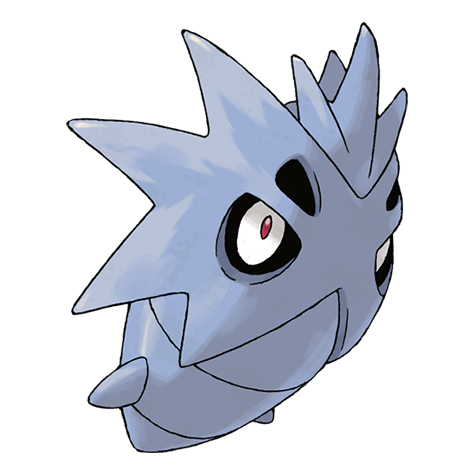
Pupitar is a Rock/Ground-type Pokémon introduced in Generation II and a middle stage of its evolution line, with a base stat total of 410.
Pupitar


Abilities
Heals the body by shedding.
Base Stats
Pupitar's Weaknesses and Resistances






Evolution Chain
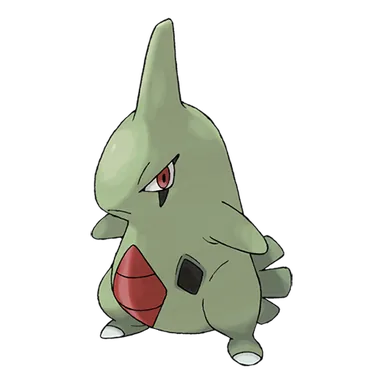
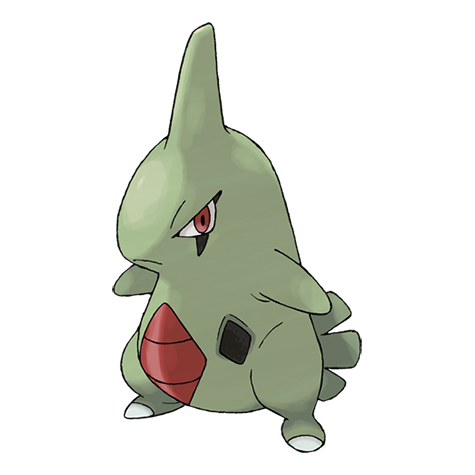
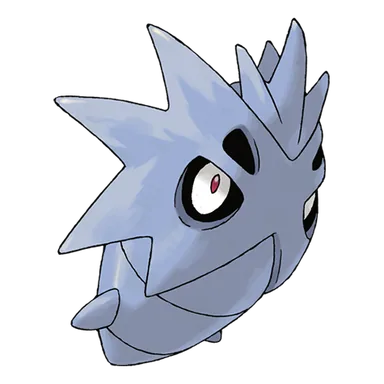
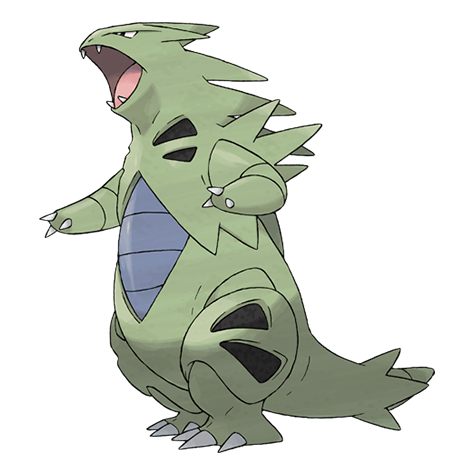
Larvitar evolves into Pupitar at level 30, and Pupitar evolves into Tyranitar at level 55.
 Larvitar
 Pupitar
 Tyranitar

Pupitar Playthrough, Competitive, and Nuzlocke Usage
Using Pupitar in a Playthrough
The Larvitar line has one of the highest final ceilings in ordinary Pokemon playthroughs but also one of the longest development curves. Larvitar evolves into Pupitar at level 30 and does not become Tyranitar until level 55, meaning much of a normal story may be spent using the weaker Rock/Ground stages before reaching the 600-base-stat final evolution; in the original Johto games, Larvitar's extremely late Mt. Silver availability makes this problem even more pronounced. Tyranitar becomes Rock/Dark and gains base 134 Attack, excellent 100/110/100 bulk, a Psychic immunity, and one of the broadest offensive movepools available, with Rock, Dark, Ground, Fighting, Fire, Ice, Electric, and other coverage depending on generation. The Generation IV physical/special split is especially helpful because Dark STAB such as Crunch finally uses Tyranitar's enormous Attack rather than its lower Special Attack, while Sand Stream from Generation III onward automatically creates sand and from Generation IV also benefits Tyranitar through the special-defense boost granted to Rock-types in sand. Mega Tyranitar further increases its already enormous stats in games where Mega Evolution is available, but the line always demands careful respect for its quadruple Fighting weakness and additional Water, Ground, Grass, Bug, Steel, and later Fairy weaknesses.
Pupitar in Competitive Pokémon
Tyranitar is one of the most historically important competitive Pokemon ever introduced. It was already a key GSC OU Pokemon through its excellent bulk, Pursuit, Roar, mixed coverage, and ability to check or trap threats such as Gengar and Exeggutor, but Generation III elevated it even further by giving it Sand Stream and Dragon Dance. Smogon describes Tyranitar as the defining Pokemon of ADV OU: permanent sand reshaped which Pokemon could thrive over long games by steadily damaging most non-Rock, Ground, and Steel Pokemon and negating their Leftovers recovery, while Tyranitar itself could use Dragon Dance, Choice Band, mixed wallbreaking, Pursuit, or defensive sets. DPP improved it again by making Crunch and Pursuit physical, adding the Rock-type special-defense bonus in sand, and supplying tools such as Stone Edge, Stealth Rock, Choice Scarf, and expanded coverage; later generations continued to use Tyranitar as a weather setter, Pursuit trapper where that move existed, wallbreaker, tank, and setup sweeper. Mega Tyranitar reaches a 700 base-stat total and preserves Sand Stream while gaining extraordinary bulk and Attack, but across every form the quadruple Fighting weakness, low Speed, and numerous additional weaknesses remain the price paid for Tyranitar's enormous versatility and power.
Pupitar in Nuzlockes
The Larvitar line can be exceptionally powerful in a Nuzlocke but requires far more investment than its final-stage strength initially suggests. Larvitar and Pupitar share Rock/Ground typing with dangerous quadruple weaknesses to Water and Grass, and Pupitar does not become Tyranitar until level 55, so carrying the line safely to its final evolution can require substantial grinding and careful matchup selection. Tyranitar's enormous stats, Psychic immunity, many resistances, and strong physical offense create an excellent late-game Pokemon once obtained, but the quadruple Fighting weakness and common Ground and Water coverage mean even a pseudo-legendary can be lost quickly to the wrong move. Sand Stream can provide Tyranitar with additional special durability from Generation IV onward, but automatic sand may also chip teammates that are not immune and therefore changes how the rest of a Nuzlocke team is managed. In original Johto the late availability makes Tyranitar more of a postgame reward than a normal story team member, while games that provide Larvitar earlier make the line a genuine long-term investment whose payoff is among the strongest in the series.
Learnsets
62 moves · Scarlet Violet
Level Up



Machine


Pokédex Entries
13 entries
Its shell is as hard as sheet rock, and it is also very strong. Its THRASHING can topple a mountain.
Even sealed in its shell, it can move freely. Hard and fast, it has outstanding destructive power.
It will not stay still, even while it's a pupa. It already has arms and legs under its solid shell.
PUPITAR creates a gas inside its body that it compresses and forcefully ejects to propel itself like a jet. The body is very durable - it avoids damage even if it hits solid steel.
A PUPITAR creates a gas inside its body that it ejects under compression to propel itself like a jet. Its body can withstand a collision with solid steel.
Even sealed in its shell, it can move freely. Hard and fast, it has outstanding destructive power.
Its body is as hard as bedrock. By venting pressurized gas, it can launch itself like a rocket.
Its shell is as hard as sheet rock, and it is also very strong. Its thrashing can topple a mountain.
This pupa flies around wildly by venting with great force the gas pressurized inside its body.
Pupitar creates a gas inside its body that it compresses and forcefully ejects to propel itself like a jet. The body is very durable—it avoids damage even if it hits solid steel.
This troublesome Pokémon can’t wait to evolve, so it relieves its stress by wildly propelling itself around using compressed gas.
This dangerous pupa thrashes about. Its shell is as hard as bedrock, containing its gradually forming new body within.
It will not stay still, even while it’s a pupa. It already has arms and legs under its solid shell.
Where To Find Pupitar
5 locations
Mt. Silver · JohtoWalking · version details vary
Mount Silver (3F)
Mount Silver (top)
Friend Safari · KalosWalking · version details vary
Friend Safari (Rock)
Route 18 · KalosRed Flowers, Walking · version details vary
Road 18
Terminus Cave · KalosWalking · version details vary
Terminus Cave (unknown area 343)
Terminus Cave (unknown area 344)
Terminus Cave (unknown area 345)
Terminus Cave (unknown area 347)
Terminus Cave (unknown area 348)
Route 15 · UnovaDark Grass, Walking · version details vary
Road 15
Additional Images
PokeAPI sprites
Open this section to load extra PokeAPI sprite images.
Pupitar Biology and Behavior
Pupitar is enclosed inside a shell whose hardness is compared with bedrock, but unlike an ordinary immobile pupa it remains violently active while the adult body develops within. Its arms and legs are already forming beneath the shell, making Pupitar less a dormant chrysalis than a heavily armored transitional body in which Tyranitar is actively taking shape. Vents in the body release compressed gas with enough force to propel Pupitar rapidly through rugged mountain terrain. That movement can be destructive enough to topple mountains, and Pupitar is capable of launching itself around even while asleep. The stage therefore functions almost like a mobile armored pressure vessel, protecting the developing adult while still allowing the Pokemon to move with explosive force.
Pupitar Biological Data
- National Pokédex
- #247
- Species
- Hard Shell Pokémon
- Height
- 3' 11" (1.2 m)
- Weight
- 335.1 lbs (152.0 kg)
- Habitat
- Mountain
- Color
- Gray
- Body Style
- Squiggle
- Gender
- 50% female / 50% male
Misc
Catch Rate: 45
Base Experience: 144 Exp
Hatch Counter: 40
Pupitar Size Comparison: BETA
Pupitar is listed at 3' 11" (1.2 m) and shown in an in-chart visual comparison.

How is visual size determined?
Pokédex height is treated as the official listed measurement, but the chart uses pose-aware visual scaling so each sprite looks reasonable in a direct comparison.
For long or coiled Pokémon, the listed height may represent total body length rather than upright height. For Pokémon with floppy ears, leaves, feathers, antennae, wings, or other flexible features, the chart usually measures to the top of the solid, substantial part of the head or body instead of the tallest decorative feature.
The goal is not to replace the official height, but to make the artwork compare naturally at the size it appears to occupy.