Roserade is a Grass/Poison-type Pokémon introduced in Generation IV and a final stage of its evolution line, with a base stat total of 515.
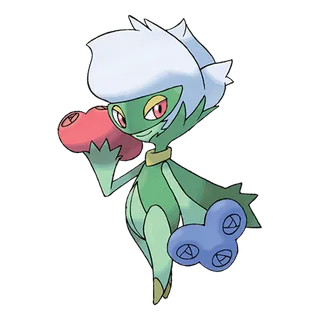
Roserade


Abilities
Heals upon switching out.
Poisons foe on contact.
Powers up the Pokémon’s weaker moves.
Hidden AbilityBase Stats
Roserade's Weaknesses and Resistances






Evolution Chain
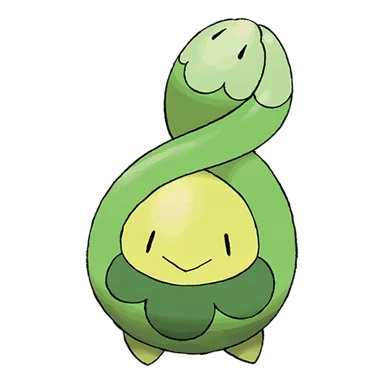
Budew evolves into Roselia by leveling up high friendship during the day, and Roselia evolves into Roserade with a Shiny Stone.
 Budew
 Roselia
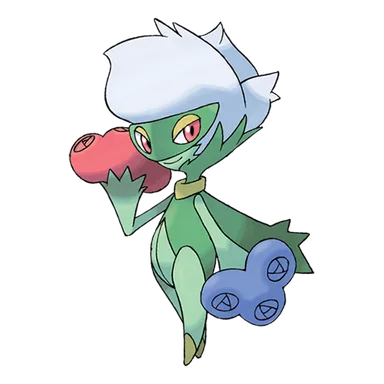 Roserade
 Playthrough, Competitive, and Nuzlocke Usage
Using Roserade in a Playthrough
The Roselia family changes considerably depending on generation because Roselia is the only stage that exists in Generation III, while Generation IV adds both the baby Pokemon Budew and the final evolution Roserade. Budew evolves into Roselia through high friendship during the daytime, and Roselia evolves into Roserade with a Shiny Stone, so later-game usefulness can depend on both friendship management and when the evolution stone becomes available. Roserade is the clear offensive endpoint, combining base 125 Special Attack, 105 Special Defense, and 90 Speed with Grass/Poison STAB, while moves such as Giga Drain, Energy Ball, Sludge Bomb, Shadow Ball, Extrasensory, and various status moves give it strong special coverage and utility. Natural Cure is especially valuable during a long playthrough because switching Roserade out removes major status conditions, while Poison Point can punish contact and Technician can strengthen certain lower-power attacks when the Hidden Ability is available. Its weaknesses to Fire, Ice, Flying, and Psychic and very poor physical Defense mean Roserade should usually enter against Water-, Grass-, Electric-, or Fighting-type attacks it resists rather than attempting to absorb strong neutral physical hits.
Roserade in Competitive Pokémon
Roserade became a serious competitive Pokemon as soon as it debuted in Generation IV, where its combination of base 125 Special Attack, base 90 Speed, Natural Cure, Sleep Powder, and entry hazards gave it a rare mixture of offensive pressure and support. In DPP OU it is notable as one of the metagame's best Spikes and Toxic Spikes setters and one of the few hazard setters that also threatens immediate heavy damage with moves such as Leaf Storm. Natural Cure lets Roserade absorb status and remove it simply by switching, while its Poison typing also allows it to clear opposing Toxic Spikes upon entering the field. In Generation V it became a major UU threat, using Spikes, Toxic Spikes, Sleep Powder, strong Grass attacks, and recovery to punish bulky Water-types while remaining difficult for passive teams to wear down through status alone. Its longstanding limitation is physical fragility: base 60 HP and 55 Defense make strong physical priority or faster attackers extremely dangerous, so Roserade succeeds through positioning, resistances, and offensive pressure rather than raw all-purpose bulk.
Roserade in Nuzlockes
The Roselia line can be excellent in a Nuzlocke once it reaches Roserade, but the development path requires more planning than a simple level-based evolution. Budew is fragile and must gain high friendship during the day to become Roselia, while a Shiny Stone is then required for Roserade, so some games may force the player to use the weaker stages for a substantial period. Roserade's high Special Attack can end favorable Water-, Ground-, and Rock-type matchups quickly, and Natural Cure is unusually valuable in permadeath play because poison, paralysis, sleep, or burn can be removed just by switching out. Its Grass/Poison typing provides useful resistances but does not compensate for very low physical Defense, making strong Flying, Fire, Ice, Psychic, or even neutral physical attacks a serious threat. The line is safest when used as a fast special attacker and status absorber rather than as a general defensive Grass-type.
Learnsets
8 moves · Legends Arceus
Level Up — Legends Arceus



Pokédex Entries
8 entries
It attracts prey with a sweet aroma, then downs it with thorny whips hidden in its arms.
With the movements of a dancer, it strikes with whips that are densely lined with poison thorns.
Each of its hands contains different toxins, but both hands can jab with near-fatal power.
Its sweet aroma attracts prey. Then it spews poison. The more toxic it is, the sweeter its aroma.
Luring prey with a sweet scent, it uses poison whips on its arms to poison, bind, and finish off the prey.
After captivating opponents with its sweet scent, it lashes them with its thorny whips.
The poison in its right hand is quick acting. The poison in its left hand is slow acting. Both are life threatening.
Hidden within the bouquet on each hand are thorned whips loaded with virulent poison. Roserade moves gracefully as it corners its prey and mercilessly lashes them with its whips.
Where To Find Roserade
3 locations
Lostlorn Forest · UnovaGrass Spots · version details vary
Lostlorn Forest
Route 12 · UnovaGrass Spots · version details vary
Road 12
Victory Road · UnovaGrass Spots · version details vary
Victory Road 2 (unknown area 72)
Held Items
2 items
- Black 2: 1% chance
- White 2: 1% chance
- Diamond: 5% chance
- Pearl: 5% chance
- Platinum: 5% chance
- Heartgold: 5% chance
- Soulsilver: 5% chance
- Black: 5% chance
- White: 5% chance
- Black 2: 5% chance
- White 2: 5% chance
- X: 5% chance
- Y: 5% chance
- Omega Ruby: 5% chance
- Alpha Sapphire: 5% chance
- Sun: 5% chance
- Moon: 5% chance
- Ultra Sun: 5% chance
- Ultra Moon: 5% chance
Additional Images
PokeAPI sprites
Open this section to load extra PokeAPI sprite images.
Roserade Biology and Behavior
Roserade is an elegant but lethal predator that lures prey closer with a sweet floral aroma before attacking with thorn-covered vines hidden inside the bouquets on its hands. The sweeter the fragrance becomes, the more toxic Roserade's poison is likely to be, turning the very scent that attracts prey into a warning of chemical danger. Each arm produces a different poison: the right arm carries a faster-acting toxin, while the left produces a slower-acting one, and either can be life-threatening. Roserade fights with dancer-like movements, concealing the exact moment its poisonous whips emerge and striking with enough precision that its graceful appearance becomes part of the hunting strategy. Evolution therefore transforms Roselia's defensive flowers into a highly specialized combination of lure, venom delivery system, and concealed weaponry.
Roserade Biological Data
- National Pokédex
- #407
- Species
- Bouquet Pokémon
- Height
- 2' 11" (0.9 m)
- Weight
- 32.0 lbs (14.5 kg)
- Habitat
- Currently Unknown
- Color
- Green
- Body Style
- Humanoid
- Gender
- 50% female / 50% male
Misc
Catch Rate: 75
Base Experience: 232 Exp
Hatch Counter: 20
Roserade Size Comparison: BETA
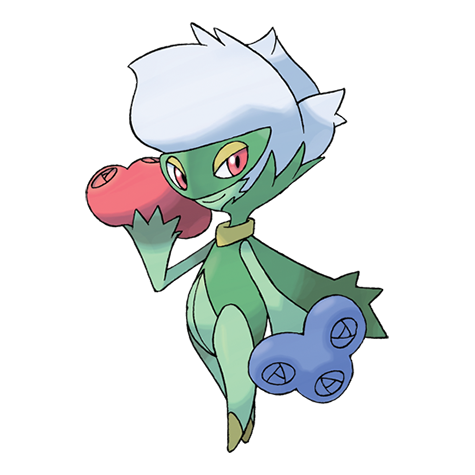
Roserade is listed at 2' 11" (0.9 m); this chart uses a pose-adjusted visual scale.

How is visual size determined?
Pokédex height is treated as the official listed measurement, but the chart uses pose-aware visual scaling so each sprite looks reasonable in a direct comparison.
For long or coiled Pokémon, the listed height may represent total body length rather than upright height. For Pokémon with floppy ears, leaves, feathers, antennae, wings, or other flexible features, the chart usually measures to the top of the solid, substantial part of the head or body instead of the tallest decorative feature.
The goal is not to replace the official height, but to make the artwork compare naturally at the size it appears to occupy.
Roserade currently uses a pose-adjusted visual scale.