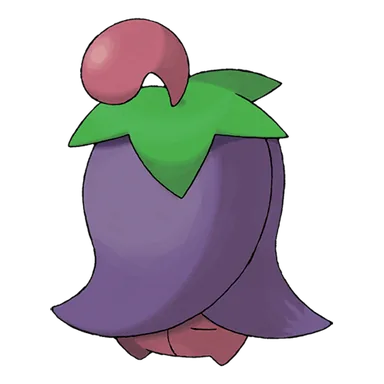
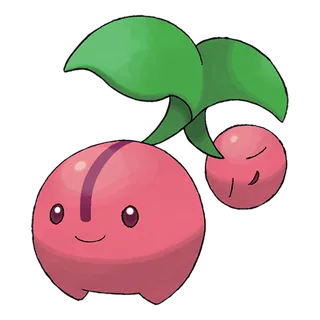
Cherubi is a Grass-type Pokémon introduced in Generation IV and the first stage of its evolution line, with a base stat total of 275.
Cherubi

Abilities
Boosts the Pokémon’s Speed in sunshine.
Base Stats
Cherubi's Weaknesses and Resistances





Evolution Chain
Cherubi evolves into Cherrim at level 25.
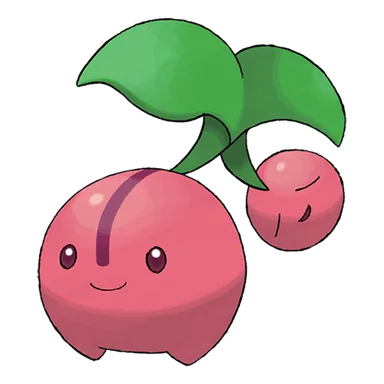 Cherubi
 Cherrim
Cherubi Playthrough, Competitive, and Nuzlocke Usage
Using Cherubi in a Playthrough
Cherubi evolves into Cherrim at level 25, producing a pure Grass Pokemon whose most distinctive mechanic is Flower Gift rather than raw statistics. Cherrim's 87 Special Attack and 85 Speed are usable but unexceptional, and Grass provides valuable Water-, Ground-, and Rock-type matchups alongside weaknesses to Fire, Ice, Flying, Bug, and Poison. In harsh sunlight Cherrim changes from Overcast Form to Sunshine Form, and Flower Gift increases both its own and its allies' Attack and Special Defense by 50 percent; this makes physical teammates substantially stronger even though Cherrim itself is often better suited to special Grass attacks or support. Sunny Day, Solar Beam, Energy Ball, Giga Drain, Weather Ball, Leech Seed, Aromatherapy in older games, Morning Sun or Synthesis, and later physical options give the line several ways to exploit weather, but outside sunlight Cherrim is generally mediocre. A Timid or Modest nature is straightforward for special offense, while teams specifically exploiting Flower Gift physically may build Cherrim differently, but the need to establish sun makes it less plug-and-play than most story Grass-types.
Cherubi in Competitive Pokémon
Cherrim's competitive history is almost entirely tied to Flower Gift and dedicated sun teams. Smogon lists it as ZU in DPP and SM, and DPP analysis describes Sunny Day support as effectively the reason to use it at all: Flower Gift raises Cherrim's and its allies' Attack and Special Defense by 50 percent, while Aromatherapy, Leech Seed, healing, and Grass STAB can provide useful secondary support. In BW NU sun, Cherrim had a more interesting team niche because Flower Gift could strengthen physical sun partners such as Sawsbuck and Shiftry while Cherrim itself used Growth, Seed Bomb, Giga Drain, Weather Ball, or other coverage. Even so, its mediocre base stats and shallow movepool make it badly outclassed as a conventional sweeper, and later Smogon analyses explicitly describe its offensive sets as inferior to stronger sun abusers such as Leafeon, Victreebel, and Shiftry. Its legitimate competitive identity is therefore not 'strong Grass attacker' but a rare teamwide weather support Pokemon whose signature Ability can matter substantially in the specific archetypes built to exploit it.
Cherubi in Nuzlockes
Cherrim can be useful in a Nuzlocke when a team is deliberately built around sunlight, but outside that context its average defenses and limited coverage make it difficult to justify over stronger Grass encounters. Flower Gift is safer than many setup strategies because sunlight passively raises Cherrim's Special Defense and the Attack and Special Defense of allies without requiring Cherrim to lower its own defenses or sacrifice HP. Recovery through Morning Sun, Synthesis, or Giga Drain can reduce item use, while Grass STAB handles Water, Ground, and Rock opponents cleanly. The danger is that strong sunlight simultaneously boosts enemy Fire attacks, one of Cherrim's weaknesses, and setting Sunny Day manually costs a turn during which a critical hit or unexpected coverage move can occur. The line is therefore safest when sun is already part of the team's strategy or can be established predictably, rather than forcing Cherrim to create and exploit its own weather in every important battle.
Learnsets
8 moves · Legends Arceus
Level Up — Legends Arceus





Pokédex Entries
8 entries
The small ball holds the nutrients needed for evolution. Apparently, it is very sweet and tasty.
Sunlight colors it red. When the small ball is drained of nutrients, it shrivels to herald evolution.
The small ball is not only filled with nutrients, it is also tasty. STARLY try to peck it off.
It evolves by sucking the energy out of the small ball where it had been storing nutrients.
The small ball is not only filled with nutrients, it is also tasty. Starly try to peck it off.
It nimbly dashes about to avoid getting pecked by bird Pokémon that would love to make off with its small, nutrient-rich storage ball.
The deeper a Cherubi’s red, the more nutrients it has stockpiled in its body. And the sweeter and tastier its small ball!
Once the fruit growing alongside the main body is large and plump, Cherubi will use the nutrients within to evolve. The fruit then detaches, becoming nourishment for other creatures.
Where To Find Cherubi
20 locations
Route 3 · GalarBerry Trees · version details vary
Route 3 (East)
National Park · JohtoHeadbutt · version details vary
National Park
Eterna Forest · SinnohHoney Tree · version details vary
Eterna Forest
Floaroma Meadow · SinnohHoney Tree · version details vary
Floaroma Meadow
Fuego Ironworks · SinnohHoney Tree · version details vary
Fuego Ironworks
Route 205 · SinnohHoney Tree · version details vary
Road 205 (east, towards Eterna City)
Road 205 (south, towards Floaroma Town)
Route 206 · SinnohHoney Tree · version details vary
Road 206
Route 207 · SinnohHoney Tree · version details vary
Road 207
Route 208 · SinnohHoney Tree · version details vary
Road 208
Route 209 · SinnohHoney Tree · version details vary
Road 209
Route 210 · SinnohHoney Tree · version details vary
Road 210 (south, towards Solaceon Town)
Road 210 (west, towards Celestic Town)
Route 211 · SinnohHoney Tree · version details vary
Road 211 (east, towards Celestic Town)
Route 212 · SinnohHoney Tree · version details vary
Road 212 (east, towards Pastoria City)
Road 212 (north, towards Hearthome City)
Route 213 · SinnohHoney Tree · version details vary
Road 213
Route 214 · SinnohHoney Tree · version details vary
Road 214
Route 215 · SinnohHoney Tree · version details vary
Road 215
Route 218 · SinnohHoney Tree · version details vary
Road 218
Route 221 · SinnohHoney Tree · version details vary
Road 221
Route 222 · SinnohHoney Tree · version details vary
Road 222
Valley Windworks · SinnohHoney Tree · version details vary
Valley Windworks
Held Items
1 items
- Diamond: 5% chance
- Pearl: 5% chance
- Platinum: 5% chance
- Heartgold: 5% chance
- Soulsilver: 5% chance
- Black: 5% chance
- White: 5% chance
- Black 2: 5% chance
- White 2: 5% chance
- X: 5% chance
- Y: 5% chance
- Omega Ruby: 5% chance
- Alpha Sapphire: 5% chance
- Sun: 5% chance
- Moon: 5% chance
- Ultra Sun: 5% chance
- Ultra Moon: 5% chance
Additional Images
PokeAPI sprites
Open this section to load extra PokeAPI sprite images.
Cherubi Biology and Behavior
Cherubi carries a second, much smaller head attached by a stem, but that structure functions primarily as a nutrient reserve rather than as an independent sensory organ. Stored nutrients in the smaller head feed the main body as it grows, and the entire Pokemon becomes redder after absorbing enough sunlight, visibly indicating that it has accumulated substantial energy. The second head is sweet and edible, attracting predators such as Starly that attempt to pluck it away. As evolution approaches, the reserve is gradually consumed, causing the smaller head to shrivel and wilt before eventually detaching; the discarded structure then becomes food for other creatures. Cherubi therefore stores much of the energy needed for development in a conspicuous external organ that simultaneously makes the juvenile Pokemon attractive to predators.
Cherubi Biological Data
- National Pokédex
- #420
- Species
- Cherry Pokémon
- Height
- 1' 4" (0.4 m)
- Weight
- 7.3 lbs (3.3 kg)
- Habitat
- Currently Unknown
- Color
- Pink
- Body Style
- Heads
- Gender
- 50% female / 50% male
Misc
Catch Rate: 190
Base Experience: 55 Exp
Hatch Counter: 20
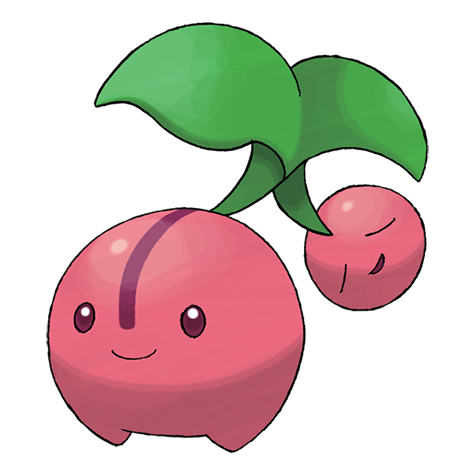
Cherubi Size Comparison: BETA
Cherubi is listed at 1' 4" (0.4 m) and shown in an in-chart visual comparison.

How is visual size determined?
Pokédex height is treated as the official listed measurement, but the chart uses pose-aware visual scaling so each sprite looks reasonable in a direct comparison.
For long or coiled Pokémon, the listed height may represent total body length rather than upright height. For Pokémon with floppy ears, leaves, feathers, antennae, wings, or other flexible features, the chart usually measures to the top of the solid, substantial part of the head or body instead of the tallest decorative feature.
The goal is not to replace the official height, but to make the artwork compare naturally at the size it appears to occupy.